


By Ellen Smirl
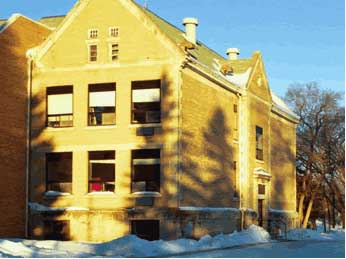
This study evaluated The Madison, an 85 unit congregate housing apartment
located in Winnipeg Manitoba, using qualitative methods and a
cost-comparison to the findings of the At Home/Chez Soi Housing First
Study.
Given the persistent challenges of homelessness, it is worthwhile to
evaluate congregate housing models as one option in the continuum ofchoice
to address homelessness.
Findings of this study indicate that the Madison’s congregate model can
contribute to improved capacity building, quality of life, independence,
interdependence and community building for the residents of the Madison.
The report makes several recommendations for improvement.
The Madison is operated to Siloam Mission.
This research was peer reviewed by academic housing and homelessness
experts.
 First published in the Winnipeg Free Press Sept. 13, 2016
By Lynne Fernandez
This fall Winnipeg City Council will determine the future of waste and recycling collection in our city. Current contracts with Emterra Environmental and Progressive Waste Services will expire in 2017. At least eight private companies have expressed interest in putting forward a proposal, and it will be up to council to select from the various applicants. While garbage is generally not a “sexy” topic, there are many reasons why the public should be paying attention.

By Lynne Fernandez
A new Errol Black Chair report released today examines how events are unfolding in Churchill and The Pas. It puts these events in the context of the entire Northern region and urges government to consider the needs and aspirations of Manitoba’s Northerners when considering the best way to help.
The report explains how the recent job losses caused by the Churchill port closure and Tolko plant shut down will reverberate throughout the local economy. But this study also recognizes that billions of dollars of profit have been extracted from the North and enriched people and companies with little or no connection to the region. Whether it be through hydro, mining or logging, First Nations peoples have rarely benefitted from southern enterprise and, up until recently, were not even consulted when megaprojects were planned and implemented – even though the projects destroyed traditional lands and lives.
Manitoba’s population is around 17 per cent Indigenous, and the median age in this group is 21 years, vs. 39 in the population as a whole. When we talk about the Northern economy, we should be putting it in the context of the predominately Indigenous population, keeping in mind that this population is diverse, young and growing faster than the non-Indigenous population. Because it is also a population that has not fared well under modern, colonial economic development it is now turning to its own resources and ideas to chart its own course.
The report provides details on the innovative work being done by Indigenous communities and provides recommendations for how that work can be scaled up. It concludes that there is no need for an entire region to remain underdeveloped, but Northerners themselves need to drive the change.
By Lynne Fernandez
Manitoba Government and General Employees Union members at Macdonald Youth Services (Local 221), who provide crisis intervention services to youth and families in Winnipeg, walked off the job on August 2, 2016. This move was not undertaken on a whim: strike action is the last resort in any negotiation and is an indication of the level of frustration that these members have reached.

By Sadie McInnes
Anywhere between 30,000 and 200,000 people are homeless in Canada, with another 1.7 million unable to afford adequate, suitable shelter. Winnipeg in particular has a history of housing shortages and inner-city poverty. In 2015 it was estimated that on a given night in the city there were at least 1,400 people experiencing homelessness. Winnipeg is also home to the largest urban Indigenous population in Canada and poverty rates among the highest in the country.

First published in the Winnipeg Free Press Aug. 23, 2016
By Christina Maes Nino
The issue of development fees has made headlines again as the consultant hired to take on another study of growth financing in Winnipeg, Hemson Consulting Ltd., completed its second and last engagement session on August 18. The primary purpose of the engagement was to educate stakeholders on the method for calculating growth charges. Key stakeholders have been defined as primarily Winnipeg’s development industry. The reason for this was stated a number of times, by City representatives, Hemson staff, and participants themselves: developers will be the ones seeing and dealing with growth costs most directly.
The Canadian Union of Postal Workers (CUPW) is currently engaged in collective bargaining with Canada Post. Unlike in previous rounds, the contracts of both the Urban bargaining unit (covering about 42,000 workers) and the unit of some 8,000 Rural and Suburban Mail Carriers (RSMCs) are being negotiated simultaneously.

First published as an editorial in the Winnipeg Free Press July 18, 2016
By Molly McCracken
Unless immediate action is taken, 2016 will be the first time in a generation that minimum wage workers will see their wages stagnate, which will result in fewer earnings for basics like food and shelter.
The 2016 budget failed to signal even an inflationary increase in the minimum wage. This means these earners will make $400 less in 2016/17 – the first minimum wage freeze in 16 years.
By Jess Klassen
Since late 2014, twenty-six families in Winnipeg’s inner city have been living in a new, supportive social and affordable housing complex called WestEnd Commons. The innovative development was retrofitted in the 100-year-old St. Matthew’s Anglican Church building. Church and community leaders worked for years to build the affordable family housing complex in Winnipeg’s low-income West End neighbourhood. In addition to reduced rents, WestEnd Commons has a vision to create community and increase social inclusion in this inner city neighbourhood. Full Report
WestEnd Commons hosts three components: a Neighbourhood Resource Centre, a number of independent faith communities and the twenty-six housing units. The Neighbourhood Resource Centre is a social enterprise that rents space to various community-based organizations providing essential services to people in the West End. Community members have long relied on the services and support provided by this welcoming community space, such as a food bank, drop-in, free computer and phone, sewing programs, artists’ circles, meeting and event space and a commercial kitchen. Seven communities worship within the walls of WestEnd Commons, including St. Matthew’s Anglican Church, Grain of Wheat Church-Community, Shiloh Apostolic, Emmanuel Mission and others. Finally, twenty-six units of social and affordable family housing have been erected within the walls of the church.
The idea for this ambitious project was conceived in a difficult time for the housing sector. Federal investments in housing have decreased by over 46 percent over the last twenty-five years, while the Canadian population has grown by almost 30 percent (Gaetz et al., 2014), meaning fewer affordable housing options remain for a growing number of Canadians. Locally, Manitoba Housing Renewal Corporation (MHRC) spent years acting as property manager of a deteriorating public housing stock with little capacity or intention to increase the supply of social and affordable housing, although that has changed in the past decade. Despite these odds, St. Matthews Non-Profit Housing Inc. was formed by a driven group of church and community leaders in 2009, with WestEnd Commons as its first build.
This report explores the interplay between low-cost housing with supports, and social and economic inclusion in society, through interviews with twenty-one residents. It is evident that living in WestEnd Commons has increased residents’ economic inclusion through the provision of subsidized rents, and has increased their social inclusion through supportive policies and programming.


Follow us!