
By Molly McCracken
How is it that the home of the Canadian Museum of Human Rights is also home to high and rising poverty? Can income inequality be reversed? Learn more about Make Poverty History Manitoba’s request to faith communities to act as a moral compass in Winnipeg in the face of systemic injustice.
By Don Sullivan
Update from “What the Frack is Happening in Manitoba” Nov. 22, 2018 https://policyfix.ca/2018/11/22/what-the-frack-is-happening-in-manitoba/
The corporation proposing a major mining operation on the shores of Lake Winnipeg is not providing accurate and timely information. This is putting the integrity of the public environmental review process at risk. Government need to do more to demand this information be provided in the public interest.
- Who earns a minimum wage in Manitoba?
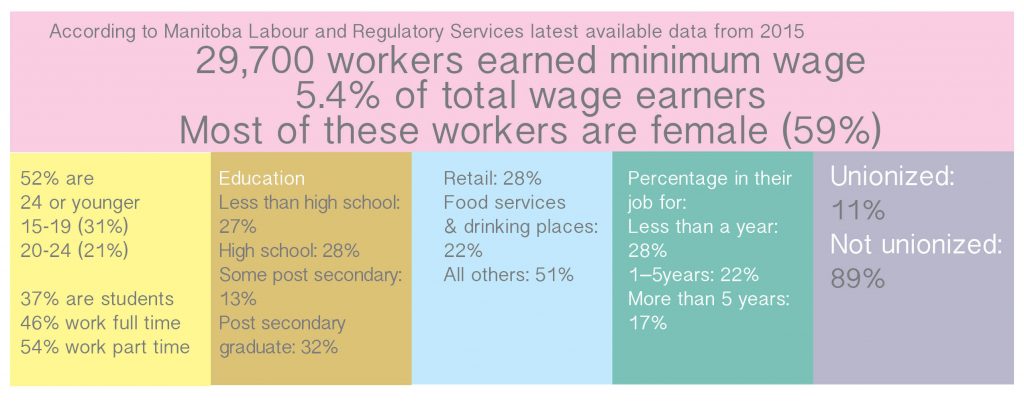
- What are the benefits to a $15 minimum wage in Manitoba?
The benefits of gradually phasing in a $15 minimum wage would be far-reaching:
- The 5.4% of workers who earn minimum wage would benefit, plus the 13.1% of workers who earn 10% above minimum wage, for a total of at least 18.5% of workers
- A full time workers’ pay would increase by $7,000/ year before tax.
Women are more likely to work part-time, care for children and parents and work in low-wage industries, which makes them more likely to earn less than $15 / hour and benefit from an increase.
By Carlos Sosa
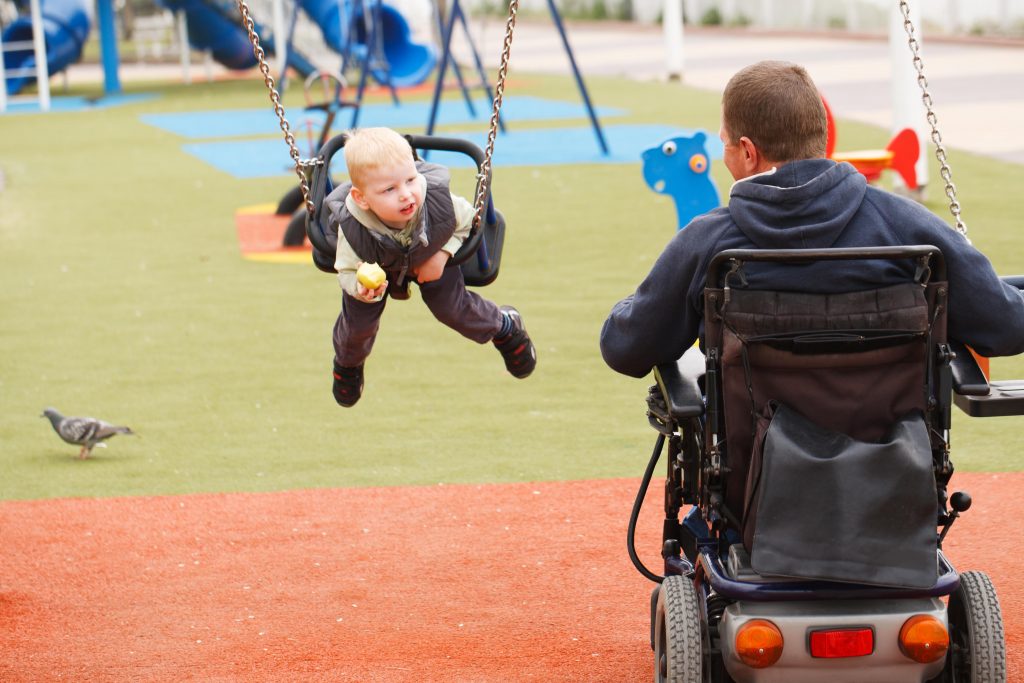
Recently the Manitoba Government made a decision to reject a core funding application from the Manitoba League of Persons with Disabilities (MLPD) for the 2018-19 fiscal year. It can be very difficult for an organization to function without core funding which diminishes its capacity. The organization (formally known as the Manitoba League of the Physically Handicapped) has existed since 1974 as a consumer-based organization of people living with disabilities.
By Lynne Fernandez
First published in the Winnipeg Free Press December 18, 2018
As reported in the Free Press, Brian Pallister is “fixing the province’s finances”, with what he calls small, gradual funding cuts. Two questions arise from his claim: do our finances really need fixing, and what happens when these cuts accumulate?
There’s no fiscal mess in Manitoba that requires immediate action. Drastic action is required, however if we are to avoid massive future spending to deal with climate change, our infrastructure deficit, income inequality and to help Manitoba’s northern communities. To ignore these problems in the name of exaggerated concerns about government debt is irresponsible.
By Mengistu Wendimu and Annette Aurélie Desmarais
This study finds milk is significantly costlier in First Nations communities than in Winnipeg and Northern Manitoba. The cost was higher in First Nations with and without access to an all-weather road. The study is based on a milk price survey in August and September 2016 in 26 stores located in 22 communities in northern Manitoba (15 First Nation and 8 non-First Nation communities) and 11 stores in Winnipeg for comparative purposes. The report also includes focus group interviews with residents in Northern First Nations.
The issues of low availability and high prices of food (including milk), limited access to and control over land, water and other natural resources can be linked to colonization. Action on the Truth and Reconciliation Commission Calls to Action and the United Nations Declaration on the Rights of Indigenous peoples to fully realize the human rights of Indigenous Manitobans is critical to the development of healthy, safe, just and sustainable Indigenous food systems.
Milk prices in Manitoba are regulated by the Milk Price Review Act and administered by the Manitoba Milk Price Review Commission. The Act is limited to one-liter containers of milk sold within a 240 km and 360 km radius from Winnipeg and Brandon. The report recommends extending current milk price regulations to include all First Nation communities in northern Manitoba. The report also recommends ensuring access to traditional foods, from which First Nations communities historically sourced nutrients essential for healthy human development and well-being. The study finds that Federal and Provincial freight subsidy programs are not effectively reducing the price of milk and other food to affordable levels in northern First Nation communities. The higher prices can be attributed to lack of competition of food vendors in First Nations communities.
By Lissie Rappaport
In Winnipeg there is a need for more affordable housing, as 21 percent of households (64,065 households) are living in unaffordable housing – according to CMHC’s definition of spending more than 30 percent of income on shelter. Additionally, there are approximately 1,500 people experiencing homelessness in the city. While affordable housing has traditionally been provided by federal or provincial governments, municipalities have a range of tools to respond to need and are most connected to the local housing market. Inclusionary housing (IH) is a one tool available to cities and was recently enabled by the Province of Manitoba.
This research informs the potential for IH in Winnipeg. Through examining existing literature and case studies in two American cities, learnings from how the policy is used elsewhere are summarized. Interviews with IH experts and those involved in local development help contextualize these learnings from elsewhere and inform key considerations for the local context. As IH is used most commonly used in fast-growing municipalities, this research explores how inclusionary housing could be implemented in Winnipeg, a city long considered to be slow-growth with a stable housing market. Read full report HERE.


Follow us!